
How to Start a Spray Drone Business in 2026
Intro
Spray drones are quickly becoming a critical tool in modern agriculture, allowing farmers and custom applicators to reach acres faster, reduce soil compaction, and spray in areas traditional ground rigs or planes cannot. However, starting a spray drone business require more than writing a check to purchase the drone, it requires regulatory compliance, proper training, reliable equipment, and a strong support system.
This quick guide walks through the key steps, requirements, and practical considerations for launching a spray drone operation in 2026.
Step 1: Understand the Regulatory Requirements
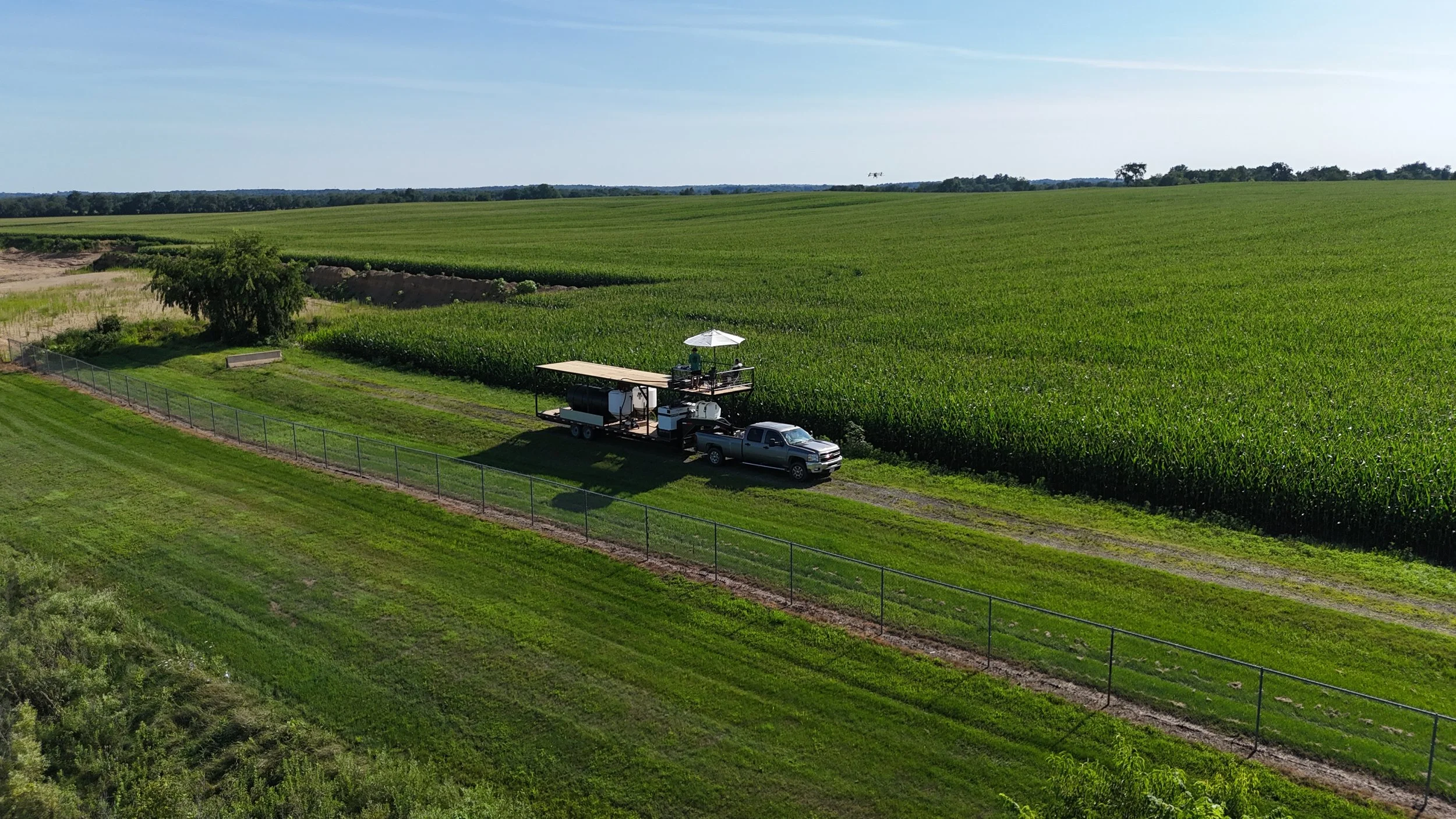
Operating a spray drone commercially or for personal farm use is regulated at both the federal and state level.
Federal (FAA)
FAA Part 107 Remote Pilot Certificate
FAA Part 137 Agricultural Aircraft Operator Certificate
44807 Exemptions (for flying a UAV over 55 pounds, flying up to three spray drones at a time, and flight beyond visual line of sight)
State Requirements for Ohio (may differ from state to state)
Ohio Department of Agriculture (ODA) pesticide applicator license (core and aerial certifications)
Compliance with Ohio pesticide laws and recordkeeping
Tip: Regulatory compliance is often the biggest barrier for new operators. Working with experienced operators and dealers who understand the process can save months of delays.
Step 2: Decide if a Spray Drone Business Makes Financial Sense
Before purchasing equipment, operators should evaluate whether drone spraying will pencil out.
Key questions to consider:
Will you spray your own acres, custom acres, or both?
How many acres per season can realistically be sprayed?
Could you look into specialty work? (Cover crop seeding, orchards, pastures, etc.)
Most successful operators start with a clear acreage goal and break-even point before investing.
Step 3: Choose the Right Spray Drone Platform
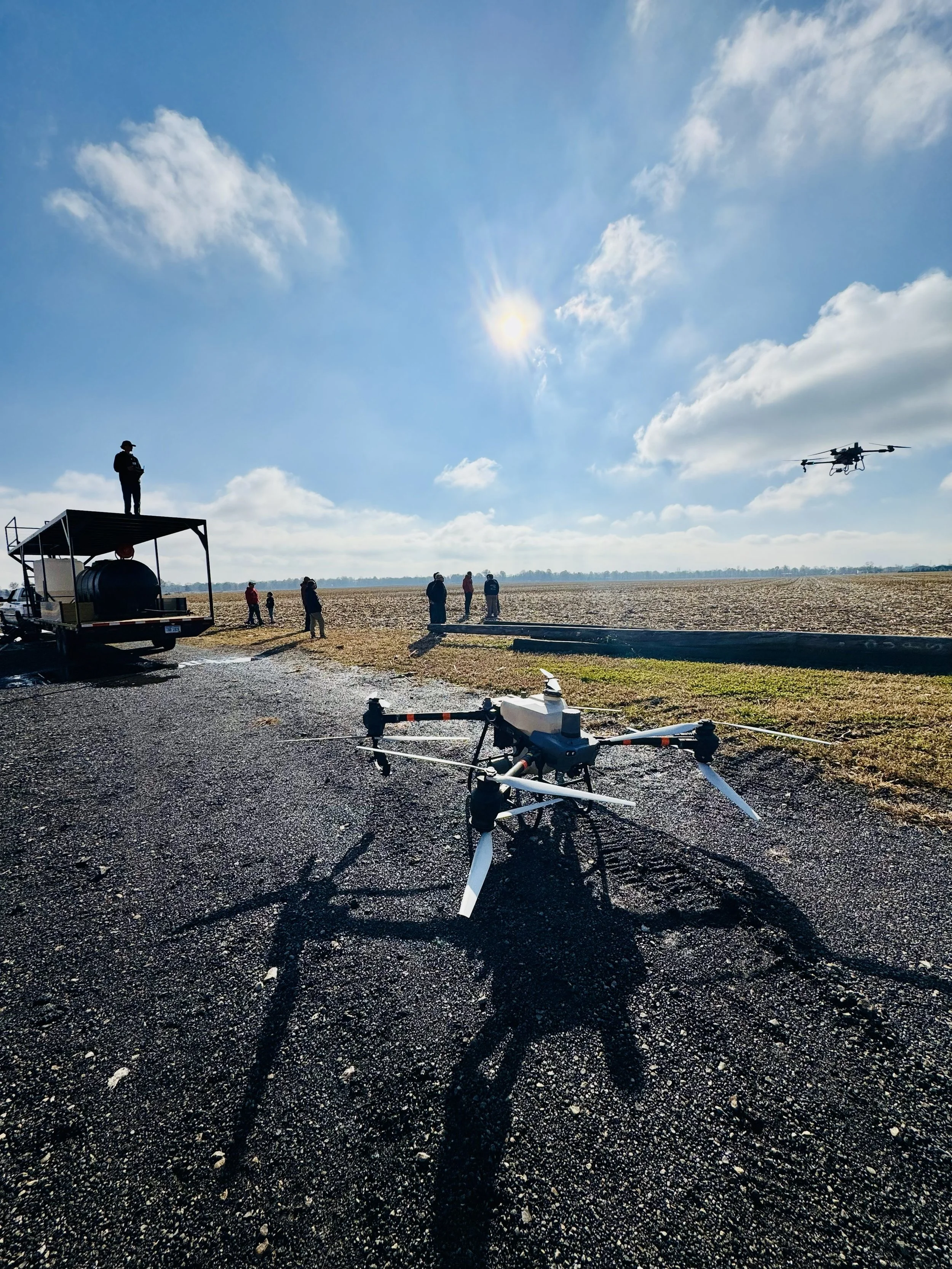
Not all spray drones are built the same. Most reliable spray drones are built overseas so don’t be tricked by the “American Made” drones that are overpriced, less efficient, and aren’t even 100% American Made. Selecting the right platform and model depends on:
Acreage volume
Terrain and field size
Budget
Operator Experience
Common considerations include payload capacity, reliability, parts availability, and service support. Just as important as the drone itself is who supports it during the spray season.
Step 4: Training and Real-World Experience Matters
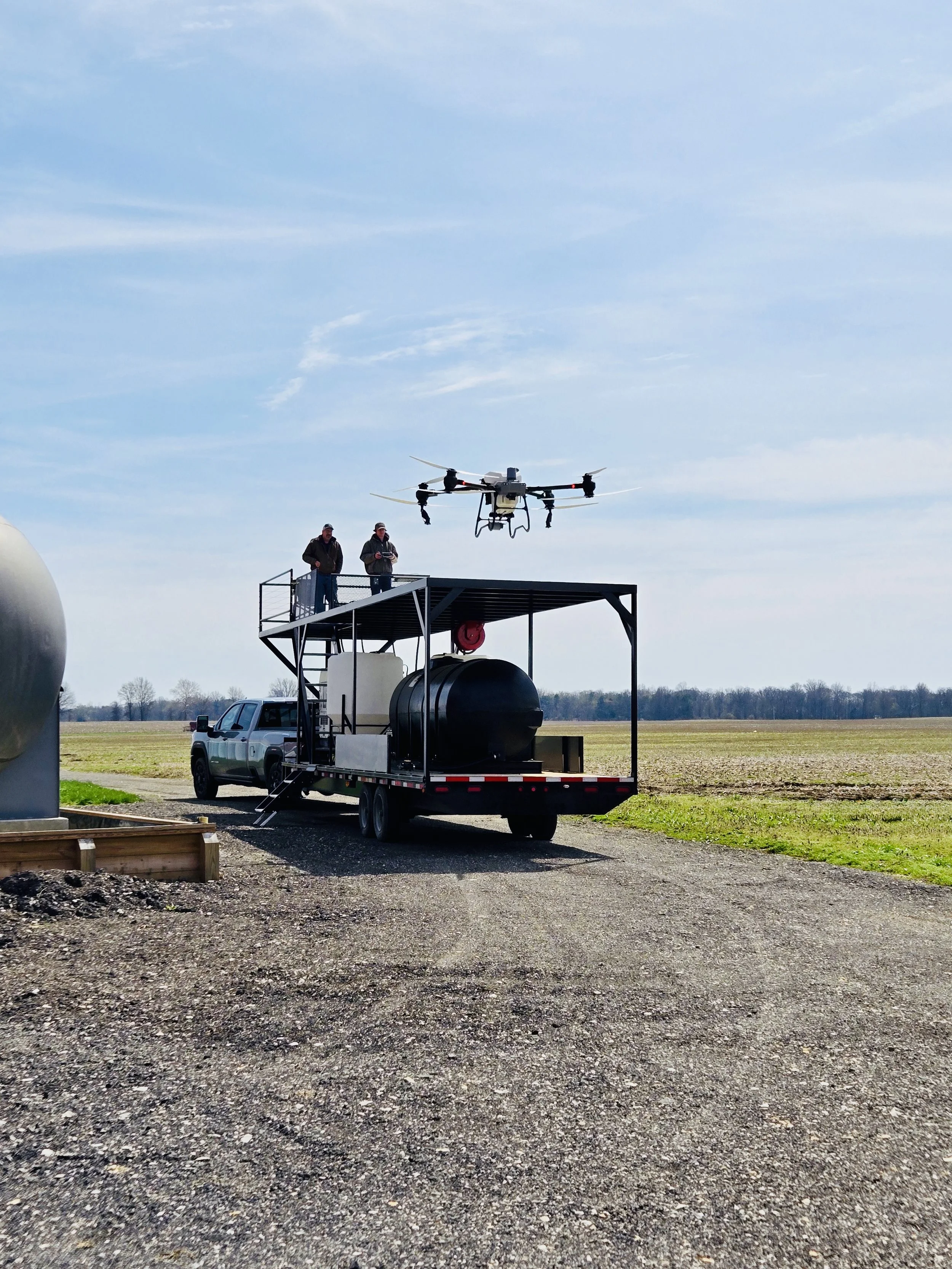
Proper training goes far beyond just learning how to fly. New operators should receive instruction on:
Spray drone and remote controller setup
Swath width and droplet size calibration
Battery management and maintenance
Emergency procedures and downtime prevention
Field mapping and boundary creation
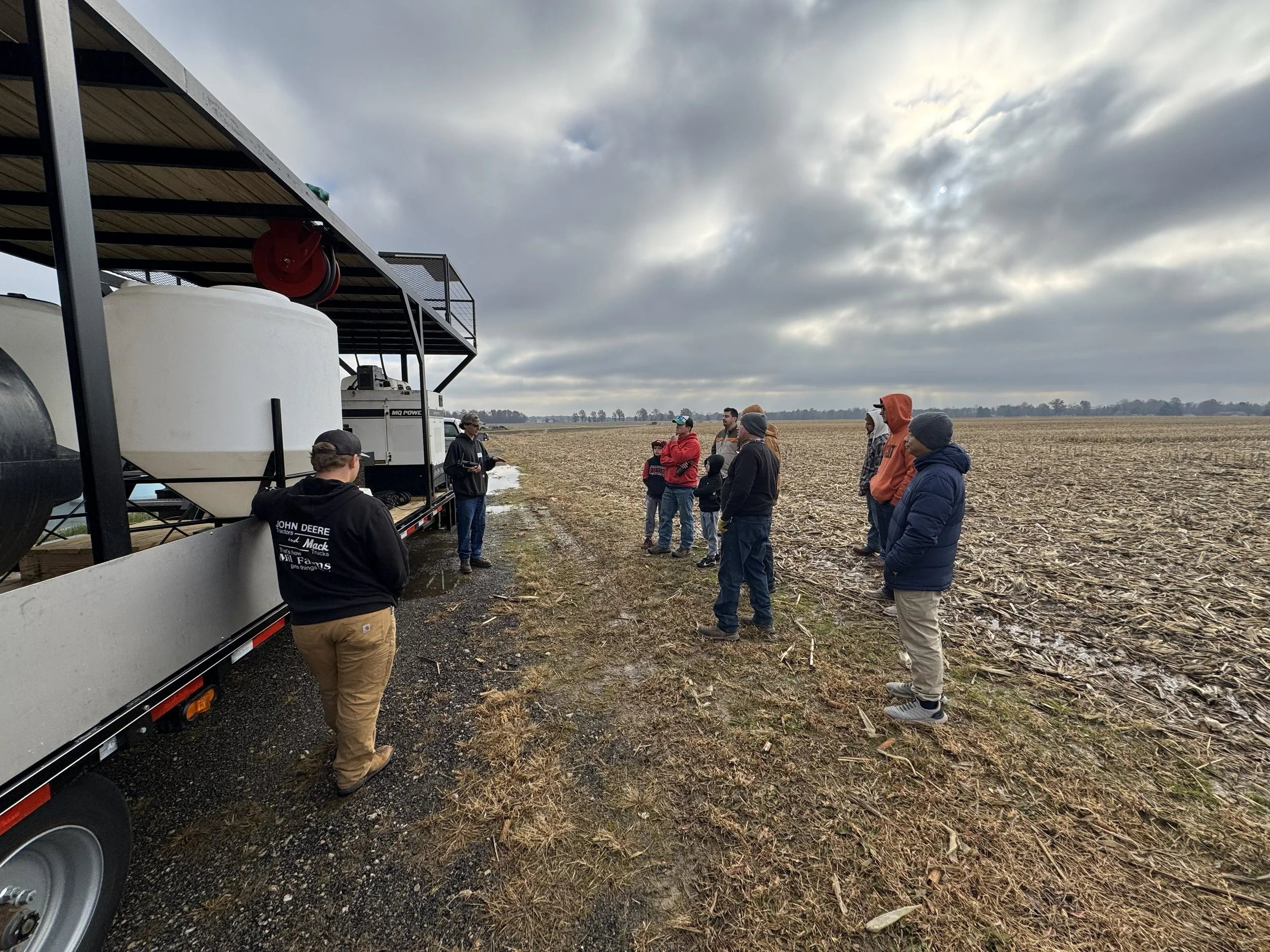
Hands on training with experienced operators significantly shortens the learning curve and reduces costly mistakes during the first season.
Step 5: Build a Support and Service Plan
Downtime during the spray season can cost thousands of dollars per day and even worse, lose clients. A strong support plan with a dealer should include:
Priority access to parts
Clear service and repair procedures
Backup or rental drone options
Direct technical support from a repair technician
A saying that we go by often is: It’s not IF you crash, it’s WHEN you crash. Many new spray drone businesses fail not because of lack of demand, but because the lack the reliable support from their dealer when problems arise.
Step 6: Launch with a Long-Term Mindset
Spray drone businesses that succeed treat their first season as a learning year, not trying break even. Keys to long-term success include:
Conservative growth goals
Focus heavily on compliance and safety
Reinvesting back into the business
Building trust with farmers, customers, and partners
Final Thoughts
Starting a spray drone business in 2026 has so much upside as the market is still wide open, but, only when done correctly. Success depends on more than just the technology; it requires proper licensing, realistic planning, hands-on training, and dependable in-season support. For operators who are willing to invest in education, community, and reliable equipment, spray drones can become a profitable and sustainable part of their operation.
Buckeye Agri Drones supports Ohio applicators through spray and enterprise drone sales, training, service, and real-world operator experience. If you’re considering starting a spray drone business, working with experienced professionals can make all the difference.
